
How to Cross-Reference Mitsubishi Inserts to PILOT Safely
The ISO shape code swaps directly across brands, while the grade is matched by ISO group and cutting condition. A systematic way to cross-reference Mitsubishi to PILOT and cut cost without risk.
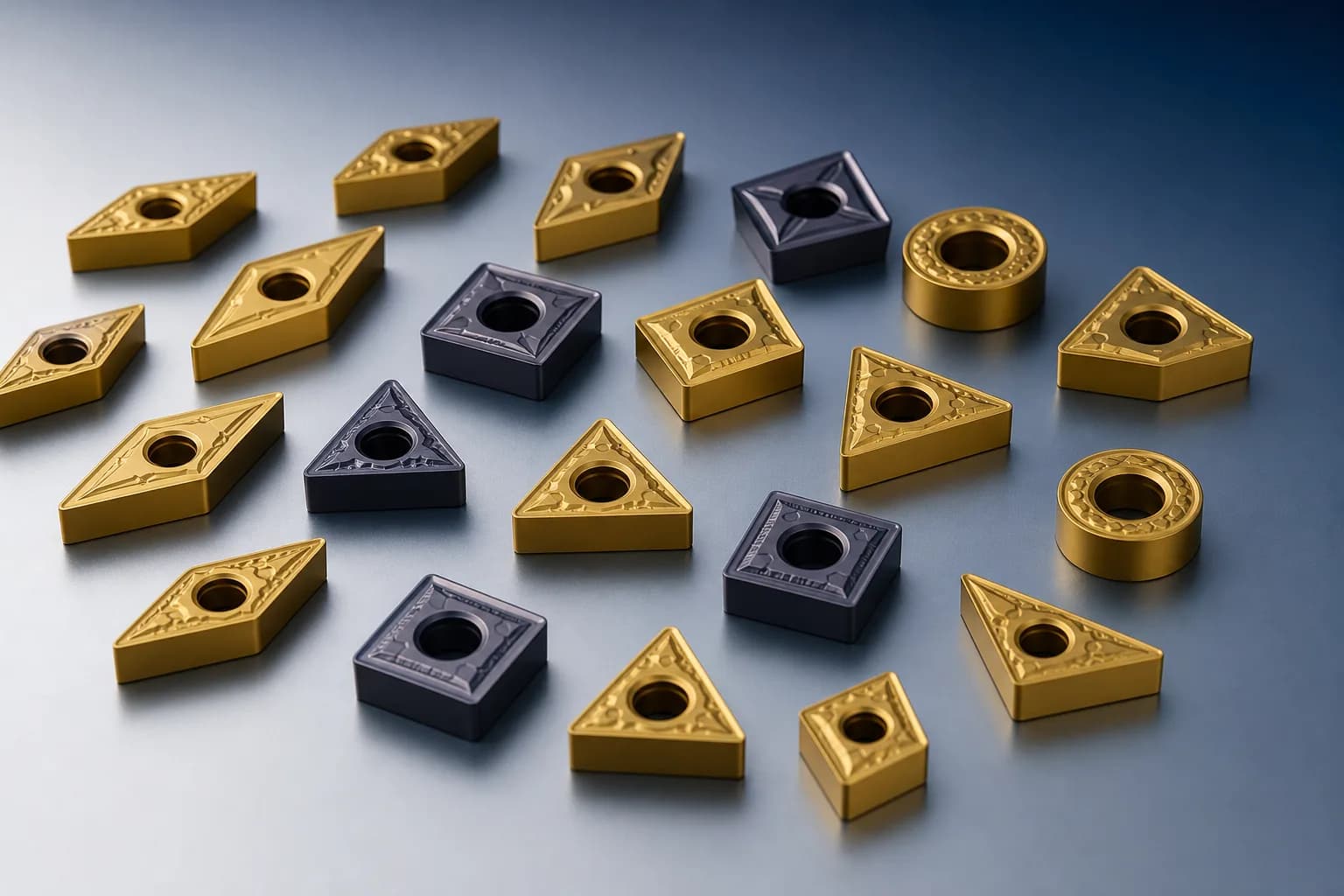
Quick Answer
The ISO shape code such as CNMG120408 is identical across brands, so it swaps directly and fits the existing holder. The grade is the carbide and coating that each brand names on its own, so match it by ISO application group, that is P steel, M stainless and K cast iron, and by chipbreaker function, then validate on the real job before ordering, rather than a blind one to one swap.
Key Takeaways
The ISO shape code swaps directly across brands and fits the existing holder with no change
Match the grade by ISO application group and colour band on the box, not by letter code
Match the chipbreaker by function, roughing, medium or finishing, not by the brand letter
Decide by cost per part and tool life, not price per insert, and validate before volume
Shop-Floor Decision Table
| Symptom | Likely Cause | First Action |
|---|---|---|
| The cross-referenced grade wears faster than before | Matched to the wrong ISO group or a coating unsuited to the material | Read the colour band and P M K group on the old box, then pick a PILOT grade in the same group |
| Chip control is poor after the brand change | The chipbreaker has a different function to the old one | Match the chipbreaker by roughing, medium or finishing, not by letter |
| The insert does not fit the holder | The ISO shape code was not read in full | Check the shape code and nose radius match on every digit |
| Cannot tell if it is more cost-effective | No common measurement | Measure cost per part and tool life under the same conditions |
Shop-Floor Check
Read the full ISO shape code of the Mitsubishi insert on every digit
Read the application group and colour band on the old box (P M K)
Note the chipbreaker type and the material and real cutting condition
Choose a PILOT grade in the same ISO group and the same chipbreaker function
Validate on the real job and measure results before ordering in volume
Common Mistakes
- • Swapping a grade blindly one to one from the letter codes of each brand
- • Looking only at price per insert instead of cost per part and tool life
- • Forgetting to match the chipbreaker, which leaves poor chip control
- • Changing several variables at once so the result cannot be analysed
- • Concluding from a single test part
Many factories want to cut insert cost by finding an alternative to Japanese brands such as Mitsubishi, but worry about picking the wrong one and scrapping parts. The good news is that the cross-reference can be done systematically once you understand what swaps directly and what must be matched.
The ISO shape code swaps directly across brands
The code on the insert, such as CNMG120408, is the ISO 1832 standard that is identical across brands, whether Mitsubishi or PILOT. So the dimensions and the fit to the holder swap directly.
- First letter is the shape: C is an 80 degree rhombic, D is 55 degree, V is 35 degree, T is triangular, W is an 80 degree trigon, S is square, R is round
- Next letter is the clearance angle and tolerance, for example N is a 0 degree clearance (negative insert)
- The number block is the cutting edge size and thickness
- The last two digits are the nose radius: 08 is 0.8 mm, 04 is 0.4 mm
If the shape code matches, it fits the existing holder immediately with no holder change.
The difference is the grade, not the shape
A grade is the carbide substrate plus coating, which each brand names on its own, so there is no 100 percent direct swap. The safe method is to read the ISO application group on the box, that is blue P steel, yellow M stainless and red K cast iron, and match it to a PILOT grade in the same ISO group, not to guess from letter codes.
Steps to cross-reference Mitsubishi to PILOT safely
Read the full ISO shape code, read the application group and colour band on the old box, note the chipbreaker type and the material and real cutting condition, then choose a PILOT grade in the same ISO group. Finally validate on the real job before ordering in volume.
Match the chipbreaker by function
A chipbreaker is the chip forming groove on the face, and it comes in roughing, medium and finishing types. Match it by function, for example roughing to roughing, not by the letter, because the chipbreaker lettering differs between brands.
Cut cost without the risk
Measure with the same criteria, such as cost per part, tool life and finish, not the price per insert alone. The fastest route is to send the old code and a box photo for the team to cross-reference. See the grade table at the PILOT insert grade guide or the dedicated comparison at Mitsubishi to PILOT equivalent, and browse the insert category.
FAQ
Can a Mitsubishi insert holder use a PILOT insert of the same code
Yes, if the ISO shape code matches, such as CNMG120408, because it is the same standard across brands. The grade still needs to suit the material and the job
Why is there no one to one grade swap table
Because each brand defines its carbide and coating differently, so a fixed direct swap can lead to a wrong choice. The safe way is to match by ISO application group and validate on the real job
What information should I send CAGO for a cross-reference
Send the full code on the insert, a box photo or colour band, the work material, and the current issue or condition. The team will shortlist a suitable PILOT grade and quote