
How to Choose a Carbide Insert Grade by ISO Material Group (P/M/K/N/S/H)
Identify the ISO material group first, then pick the grade and coating by operation. A systematic guide to choosing carbide inserts, with PILOT grade examples and how to cross-reference brands.
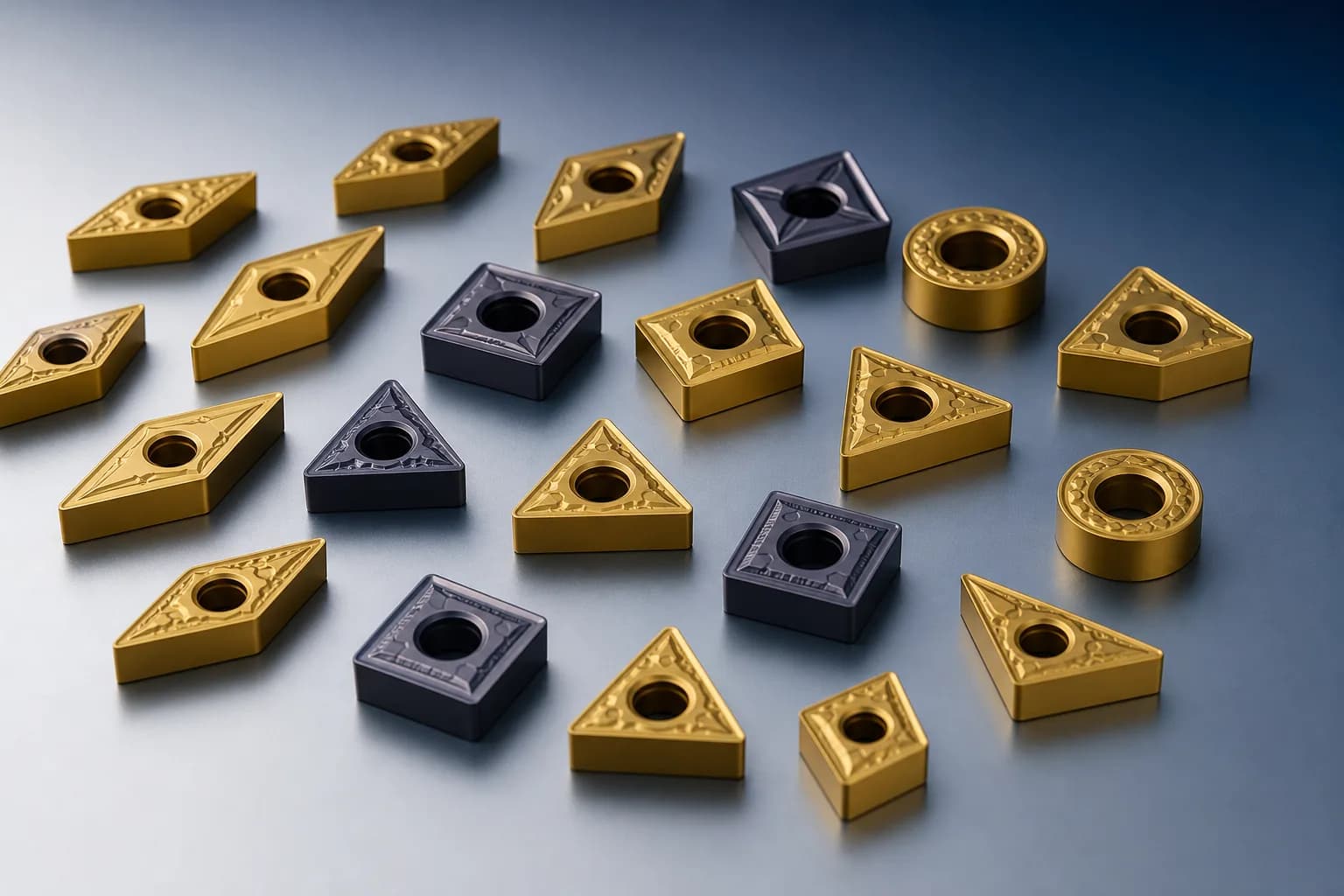
Quick Answer
Choose an insert grade by starting from the ISO material group of the workpiece, that is P steel, M stainless, K cast iron, N aluminium, S superalloys and H hardened steel, then match the operation and coating. Compare brands and validate on the real job afterwards, rather than memorising a grade code.
Key Takeaways
Always start from the ISO material group, then move to the operation and coating
CVD suits continuous turning with high wear resistance, while PVD is tougher for milling and stainless
Use a sharp uncoated grade on aluminium to reduce built-up edge
Cross-reference brands by ISO group, operation and coating, not by a direct code match
Shop-Floor Decision Table
| Symptom | Likely Cause | First Action |
|---|---|---|
| Fast wear or chipping when turning stainless | Grade too hard or not tough enough | Use a tough PVD-coated grade and control heat with coolant |
| Chips stick to the edge when milling aluminium | A coated or dull grade causing built-up edge | Switch to a sharp uncoated grade such as EAL |
| Deep crater on the face when turning steel continuously | Coating too thin for high heat work | Use a thick CVD grade such as EB230 or EC205 |
| One grade works everywhere but excels at nothing | Using a general grade for specialist work | Split grades by material group and operation |
Shop-Floor Check
Identify the workpiece material and its ISO group (P/M/K/N/S/H)
State the operation such as turning, milling, drilling or grooving, and hardness in HRC if known
Choose the substrate and coating to suit, CVD for wear or PVD for toughness
Cross-reference the previous brand by the same ISO group
Validate on the real job and measure tool life and finish before ordering volume
Common Mistakes
- • Memorising the old grade code without checking the ISO material group
- • Using a general grade for every job and expecting peak results
- • Always picking the hardest grade even when an interrupted cut needs toughness
- • Using a coated grade on aluminium until chips build up on the edge
- • Concluding from a single test part
Choosing the wrong insert grade is a leading cause of fast wear, chipping and poor surface finish. The systematic method is to start from the ISO material group of the workpiece, then move to the operation and the coating, rather than memorising a specific grade code.
ISO divides materials into 6 groups
The ISO standard sorts cutting materials into 6 groups by machining behaviour. Each group has a colour code to make it easy to read on the insert box.
- P (blue) steel: carbon steel and alloy steel, the most common group
- M (yellow) stainless: stainless and duplex, tough and prone to heat build-up
- K (red) cast iron: grey and ductile iron, short breaking chips
- N (green) non-ferrous: aluminium, copper and brass, prone to built-up edge
- S (brown) superalloys and titanium: heat resistant and hard to cut, needs a specialist choice
- H (grey) hardened steel: hardness around 45 to 65 HRC
Match a PILOT grade to the material group
- P steel: start with EP300 (general purpose, heat resistant), use EB230 for heavy continuous turning, EC205 for high speed, and EC215 as a cost-effective choice for general work
- M stainless: favour tough, heat resistant grades such as EP300 or EC215, and keep coolant under control
- K cast iron: EP330 for milling, and EB230 or EC205 for continuous turning
- N aluminium: use a sharp uncoated grade such as EAL to reduce built-up edge
- H hardened steel: EP830 is designed for high hardness, so keep runout low and the setup rigid
- S superalloys and titanium: this is specialist work, so consult the team for the right grade and cutting conditions
Coating drives tool life
- CVD: thick coating, high wear and heat resistance, ideal for continuous turning of steel and cast iron
- PVD (ALTiN / ALTiSiN): sharper and tougher, ideal for milling, interrupted cuts and stainless
- Cermet: resists built-up edge and gives a shiny finish, ideal for fine finishing
- Uncoated: very sharp, ideal for aluminium and non-ferrous metals
Cross-reference brands by ISO, not by code
Each brand defines grades differently. The safe way to compare is to align the ISO group, the operation and the coating, then validate on the real job before ordering in volume. See the full comparison at the PILOT insert grade guide or browse the insert category.
FAQ
Which insert grade should I use for stainless steel
Stainless is ISO-M, so use a tough, heat resistant grade, usually PVD coated, and keep coolant under control to reduce wear and built-up edge
What is the difference between CVD and PVD
CVD gives a thick coating with high wear and heat resistance for continuous turning, while PVD is sharper and tougher for milling, interrupted cuts and stainless
How accurate is a cross-reference between brands
It is reliable at the level of ISO group and operation, but should not be treated as a 100 percent direct swap because each brand defines grades differently. Align the ISO group and coating, then validate on the real job