
Back to blog
Measuring Tools 4 min read

How to Use a Height Gauge and Surface Plate for Height and Layout

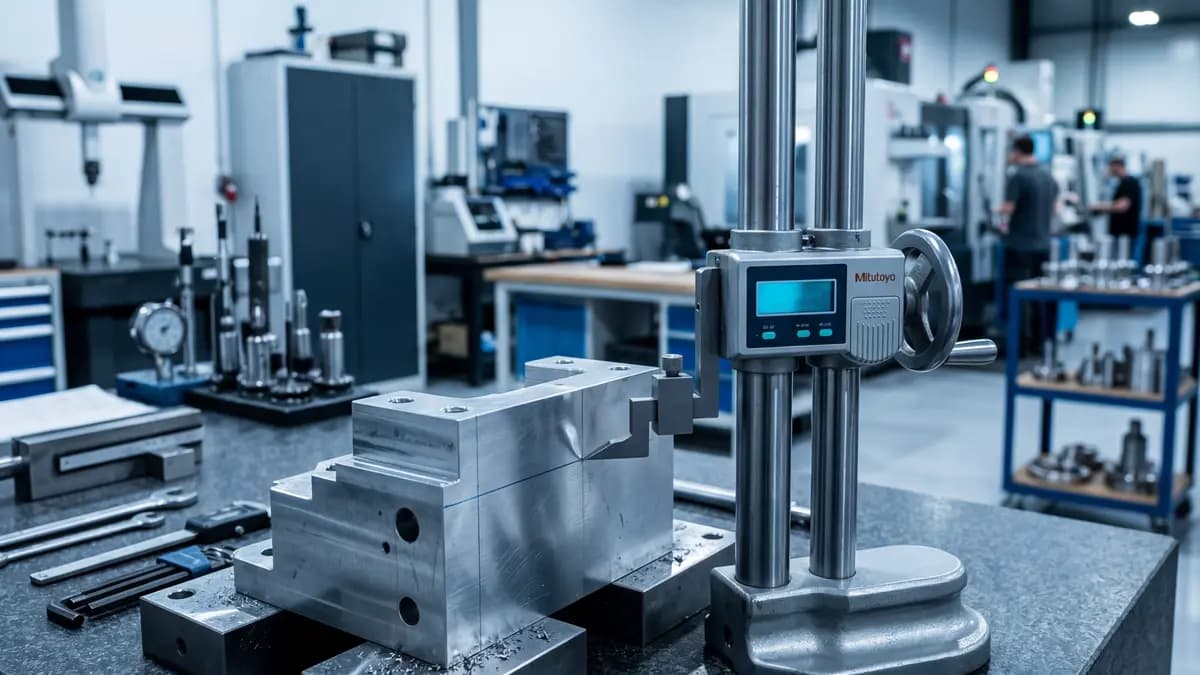
Use a height gauge with a surface plate for height checks, layout marks, and step inspection.
5/20/2026By CAGO technical team
height gauge surface plate measuring tools
How to Use a Height Gauge and Surface Plate for Height and Layout

Quick Answer

Quick answer: a height gauge on a surface plate is useful for height checking and marking work the plate must be clean and the part must sit still before you read the value

Key Takeaways

a height gauge on a surface plate is useful for height checking and marking work

the plate must be clean and the part must sit still before you read the value

on the production floor, repeatability matters more than speed alone

Shop-Floor Decision Table

SymptomLikely CauseFirst Action
Repeated measurements do not matchHand force, contact point, or zero is not stableCheck zero, clean the contact faces, and repeat with consistent force
Reading differs from the reference partThe tool is not calibrated or is used outside its suitable rangeCompare against a master, gauge block, or known reference before release
The operator is unsure how to judge the readingThe feature needs OD, ID, depth, runout, or height measurement logicChoose the measuring tool by the feature, not by habit

Shop-Floor Check

1

Clean the part and the measuring contact surfaces

2

Check zero or compare against a master before measuring

3

Hold the tool square to the feature and use consistent force

4

Repeat the measurement at least 2-3 times at critical points

5

Record the value and the method clearly: OD, ID, depth, runout, or height

Common Mistakes

  • Measuring while chips, oil, or dust remain on the contact surfaces
  • Using too much force and flexing the part or measuring faces
  • Using a caliper to decide a tight tolerance that needs a micrometer or bore gauge
  • Releasing the job from one reading without repeating the measurement

A small measuring mistake can reject a good part or release a bad one. Start with How to Use a Height Gauge and Surface Plate for Height and Layout, then check zero, contact point, hand force, and reading method before deciding whether the part passes.

What to Check

  • a height gauge on a surface plate is useful for height checking and marking work
  • the plate must be clean and the part must sit still before you read the value
  • on the production floor, repeatability matters more than speed alone

How to Apply It on the Shop Floor

On the shop floor, measure with a fixed sequence. Do not pick up the tool and trust the first number. Clean, zero, choose the correct feature from the drawing, then repeat the reading. If the value moves too much, find the cause before averaging it away.

Important Cautions

This article is a practical use and checking guide. It does not replace your work instruction, calibration procedure, or quality system. For tight tolerances or critical customers, compare against a master and follow the required calibration schedule.

FAQ

When should I use a caliper instead of a micrometer?

Use a caliper for general checks and multiple feature types. Use a micrometer when finer resolution and repeatability matter more.

How often should measuring tools be calibrated?

It depends on the quality system, usage frequency, and part risk. At minimum, compare against a master or gauge block on a defined schedule.

Why do repeated readings change?

Common causes are hand force, angle, contact point, dirt, or zero error. Fix those before blaming the workpiece.

Ask AI