
Boring Bar Deflection Guide for Deep Internal Turning
Control long-bore vibration and size drift with bar diameter, overhang, edge geometry, and parameters.
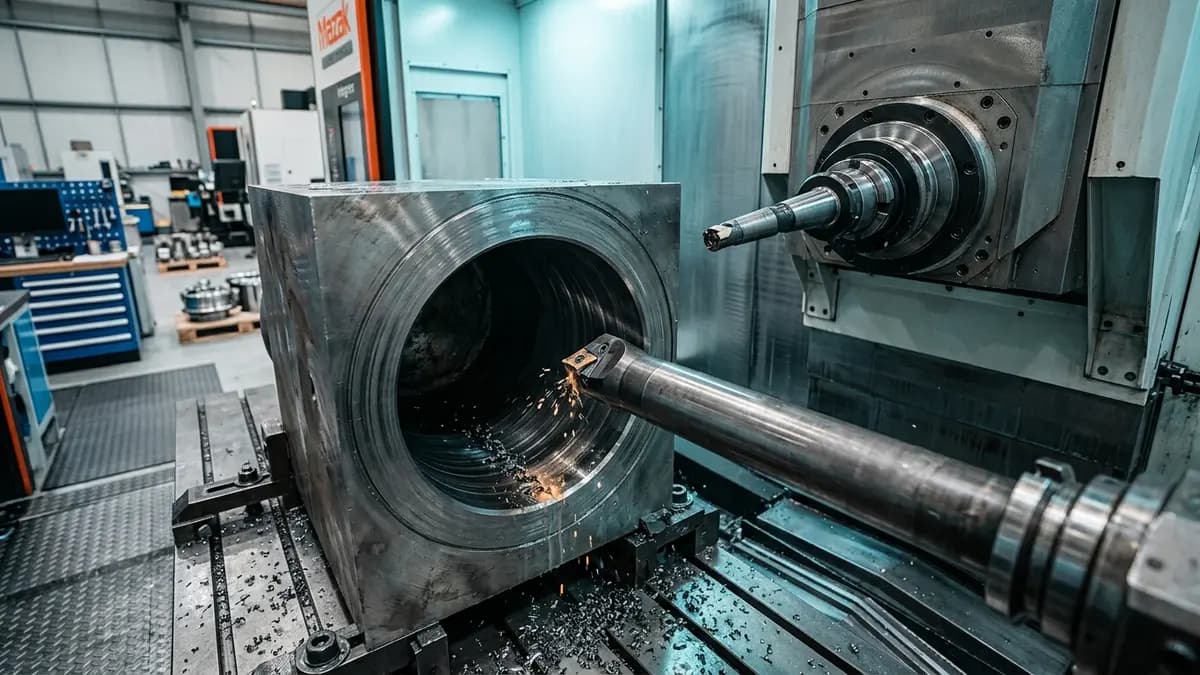
When edge life drops, finish becomes unstable, chips get hard to control, or the machine stops too often for tool changes, do not start by asking which tool is cheaper. Start with Boring Bar Deflection Guide for Deep Internal Turning, then read what the material, machine, holder, coolant, and parameters are telling you.
What to Check
- length-to-diameter ratio drives vibration risk
- use the largest boring bar the bore allows
- reduce cutting force with a sharper edge and suitable depth/feed
How to Apply It on the Shop Floor
On the shop floor, work through one issue at a time. Confirm material and hardness first, then check machine rigidity, holder, overhang, coolant, and clamping. If speed or feed needs tuning, change one variable and record the result so the team knows what actually helped.
Important Cautions
Use this article as a decision framework, not fixed cutting data. Before production use, compare it with the tool maker catalog, machine condition, and shop safety limits. If the case is unclear, send the current tool, material, operation, and problem details to CAGO for review.